
Ancient India
The Ancient World
Bernard Gagnon, CC BY-SA 3.0 , via Wikimedia Commons
The first civilization to develop in India was built around the Indus River Valley. From 3500 - 1500 BC, it may have been one of the most densely populated parts of the world. The ruins of hundreds of cities have been discovered, the most famous being Mohenjo-daro and Harappa. These cities were centrally planned with multi-story buildings and advanced sanitation including sewage systems and public baths. There is very little evidence of war and few weapons have been discovered. Unfortunately, the Indus Script has never been deciphered, and the Indus Valley Civilization remains a significant mystery to historians.
A massive population influx of Indo-Aryans from Central Asia around 1750-1500 BC inaugurated the "Vedic Period," named after the Rigveda, Yajurveda, Samaveda, and Atharvaveda, which developed during this time. Composed in Sanskrit, one of the world's oldest languages, these became the sacred foundational texts of Hinduism. One of these sacred texts, the Samaveda, is specifically a book of music, with melodies and verses for both private and public performance, both of which are considered acts of religious meditation. Indeed, the Vedas were orally transmitted through chant for centuries before being written down.
The early Vedic civilization was socially structured into a caste system, with four stratified social groups or "varnas:"
- Brahmins (priests)
- Kshatriyas (rulers and warriors)
- Vaishyas (crafters and farmers)
- Shudras (workers)
This system remained more or less in place until the twentieth century. The caste system created a very stable society, as it encouraged people to engage in svadharma-anushthana, fulfilling the duties of their caste, thereby gathering enough karma for their soul to earn a better place in future lives, and eventually be freed from saṃsāra, the cycle of reincarnation. Out of Hinduism rose many prominent world religions. The most significant are Jainism (9th to 5th century BC), Buddhism (6th century BC), and Sikhism (15th century AD). Of these, the most influential is Buddhism. Founded by a Hindu prince named Siddhartha Gautama, its philosophy is laid out by the Four Noble Truths and Noble Eightfold Path:
- Dukkha: Life is suffering.
- Samudaya: The cause of suffering is taṇhā, desire.
- Nirodha: Dukkha can be ended by abandoning taṇhā.
- Magga: To accomplish this, follow the eightfold path.
- Right View
- Right Intention
- Right Speech
- Right Action
- Right Livelihood
- Right Effort
- Right Mindfulness
- Right Concentration
Indian music is a unique and richly traditional practice. Commonly, a tambura or similar instrument will sustain a tone while other instruments, such as the bansuri flute or multi-stringed sitar will float on top. Improvisation is common using a raga, one of various types of scale. The rhythm of Indian music is based on a tala, which roughly corresponds to a time signature, although is often quite complex.
Chandragupta Maurya united most of India under the Maurya Empire in 322 BC. The empire continued to expand under his son Bindusara and grandson Aśoka, eventually extending from Bangladesh in the east to Afghanistan in the west. Aśoka, however, after witnessing the brutality of his own troops in conquering Kalinga (in eastern India), converted to Buddhism and ended the conquests. After this, the empire declined until it was replaced in a coup by the Shunga Dynasty.
Some time during this period, a treatise on art, music, and dance called the Natyashastra was written, attributed to the sage Bharata Muni. Its twenty-eighth chapter identifies four groups of instruments, as in this 1951 translation by Dr. Manomohan Ghosh:
ततं चैवावनद्धं च घनं सुषिरमेव च ।
चतुर्विधं तु विज्ञेयमातोद्यं लक्षणान्वितम् ॥ १॥
ततं तन्त्रीकृतं ज्ञेयमवनद्धं तु पौष्करम् ।
घनं तालस्तु विज्ञेयः सुषिरो वंशcच्यते ॥ २॥
such as ‘stringed’ (tata), ‘covered’ (avanaddha), ‘solid’ (ghana) and ‘hollow’ (suṣira).
[Among these,] the ‘stringed’ are those with strings, the ‘covered’ means the drums,
the ‘solid’ the cymbals and the ‘hollow’ the flutes.
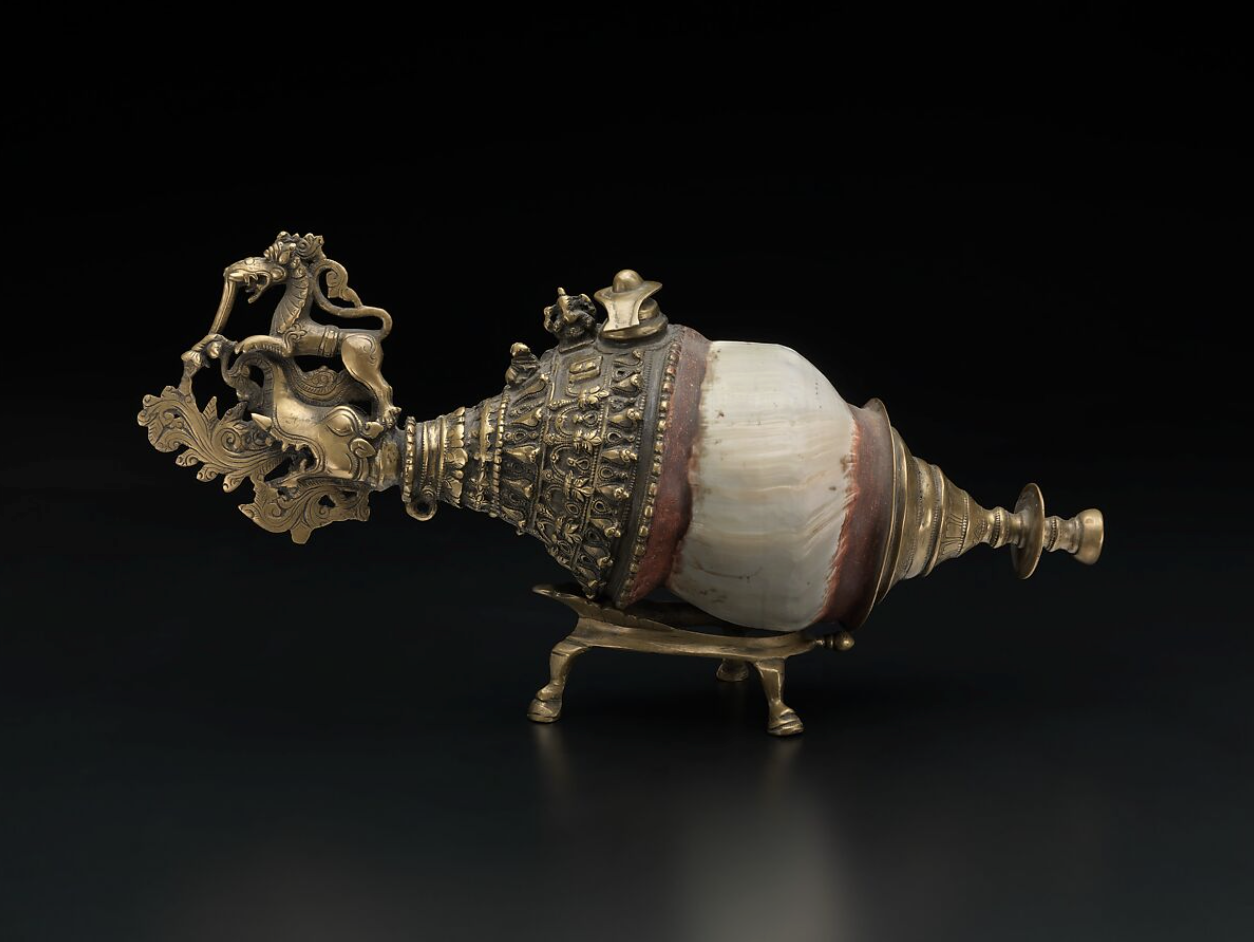
Śankh
This conch shell, elaborately decorated with images associated with the god Shiva, was used as a natural trumpet.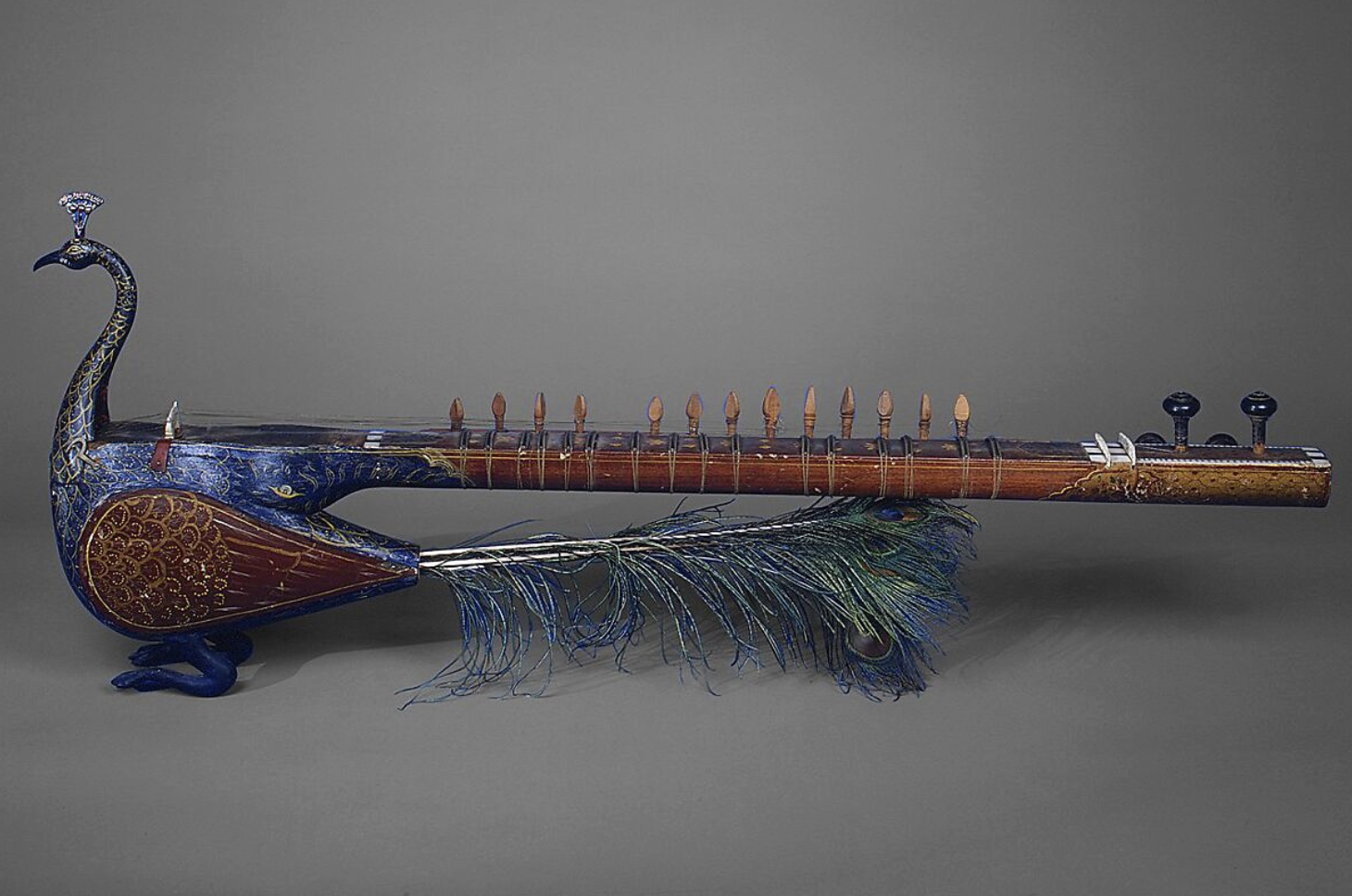
Taūs
This stringed instrument is carved to look like a peacock, which is a symbol of Sarasvatî, the goddess of music.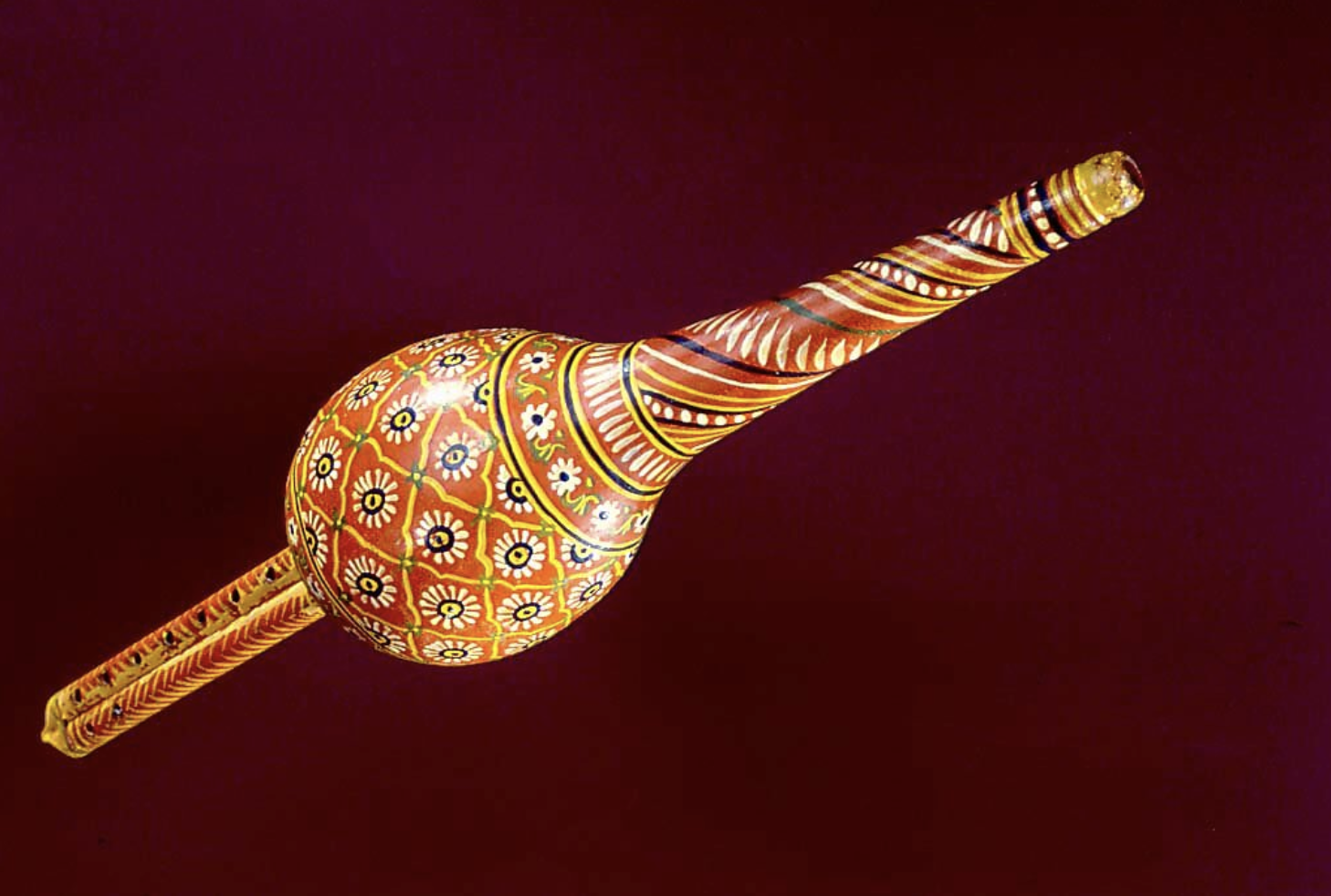
Pūngī
Used by snake charmers, this instrument features two pipes (like a Greek aulos), one for melody and one for drone, inserted into a gourd.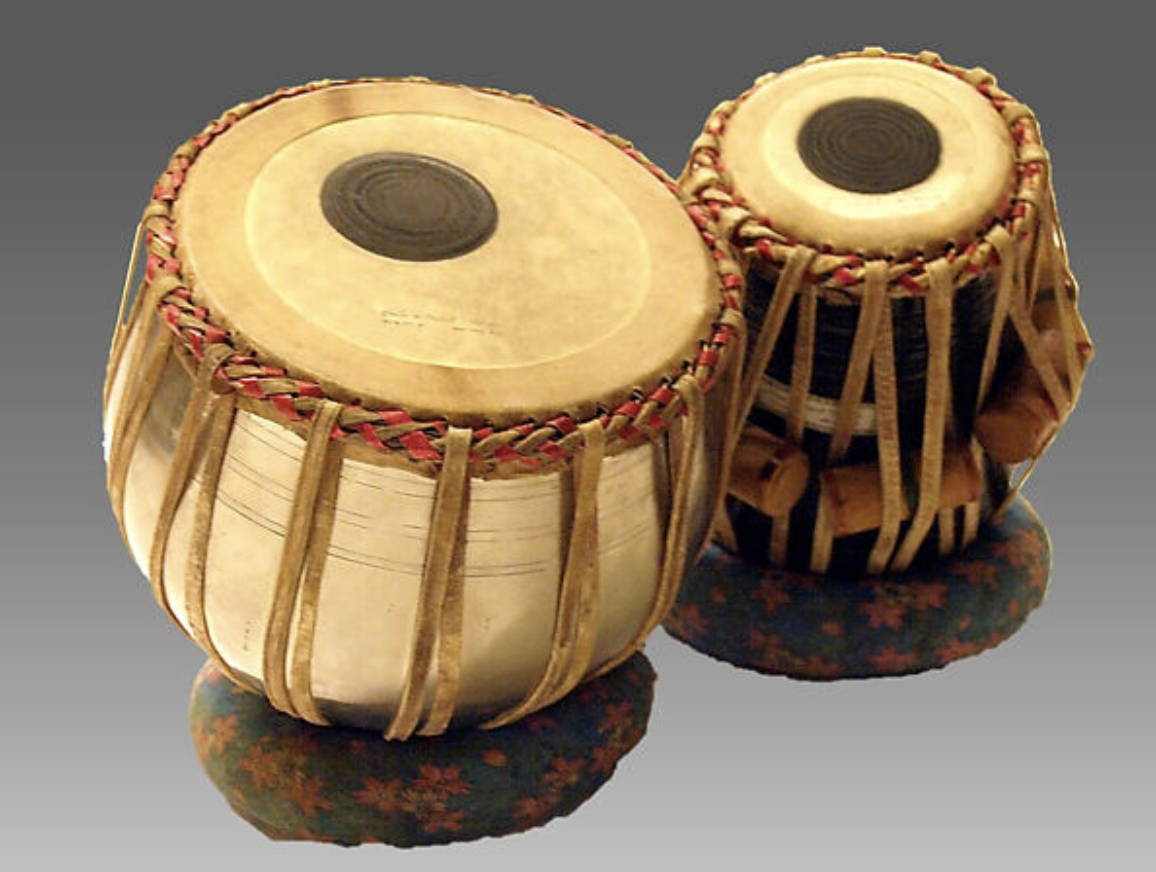
Tablas
This pair of drums was used to keep the time of the tala.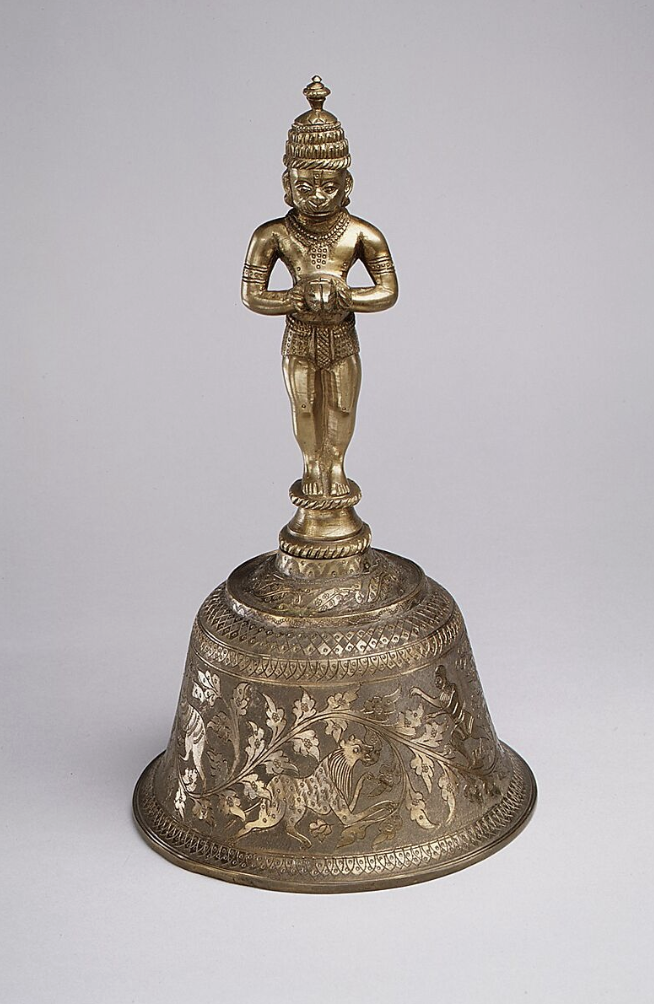
Ghanti
This bell, decorated with an image of the monkey general Hanuman, is used in religious rituals.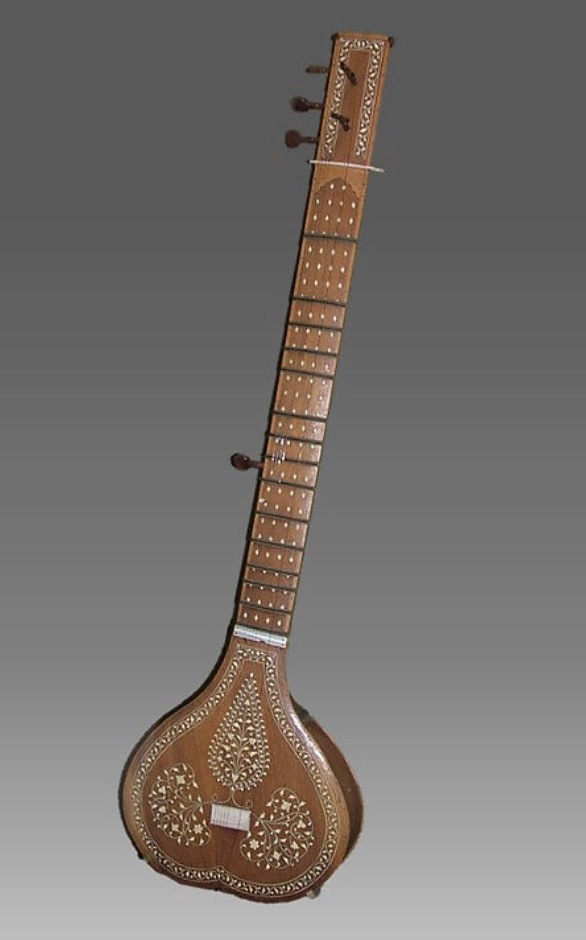
Tambura
The tambura looks similar to a sitar, but is used to create single-tone drones and resonant overtones rather than melodies.In 1914, two German ethnomusicologists named Curt Sachs and Erich Mortiz von Hornbostel devised a system for classifying instruments, called (naturally enough) the Sachs-Hornbostel Classification System. Instruments are identified by the method by which they produce sound: chordophones use vibrating strings; membranophones feature a membrane (drumhead) stretched to produce tension; ideophones, in which the instrument itself vibrates; and aerophones, which use a column of air blown through the instrument. Although the Sachs-Hornbostel system remains the most common terminology for classifying instruments, an ancient Sanskrit text had beaten them to the punch by nearly two millennia.
The Shunga dynasty collapsed during the first century BC. India was soon split between the Kushan Empire in the north and the Satavahana Dynasty on the subcontinent. As the influence of these empires waned in turn, many smaller kingdoms emerged, until most of India was again united in the Gupta Empire in 319 AD. The Ramayana by Valmiki and the Mahabharata by Vyasa, which is the longest of the ancient epic poems, reached their final form during this period. The Gupta Empire fell in 543 AD.